Homeless Torontonians struggle to hold onto their belongings. Here are a few items they are careful to protect
Lance McMillan/Toronto Star
Homes quickly accumulate junk, so much so that “decluttering” has emerged as a cottage industry. Most people take for granted not only what they own but the fact that they don’t have to give it much thought: Their stuff is largely secure, collected in one familiar place, under lock and key.
But without a home, safeguarding your belongings becomes a constant struggle.
Theft is common on the street and in shelters, most of which have strict limits on how much or what you can bring with you. (Usually only two bags, sometimes no pets or partners.) If you’re living outside, you may return to find authorities have cleared your tent entirely. If you manage to secure housing, you may have to quickly decide what to abandon to observe the building’s rules on what and how much you can bring.
On top of that, homeless and precariously housed people, limited to space they don’t own or control, don’t typically enjoy the legal protections those with land or stable tenancy do. That means their possessions can be plucked arbitrarily without redress.
One formerly homeless colleague of Nicholas Blomley, a human geographer at Simon Fraser University, describes this recurring dispossession as “a constant whine, a hum.”
“People talk about making this kind of terrible choice,” says Blomley, who alongside his colleagues interviewed numerous homeless people from Toronto and British Columbia’s Lower Mainland about this issue in recent years.
“Do I go find food? Do I go get my Staph infection dealt with? Or do I hold onto my possessions? Because from their perspective, it’s one or the other.”
Without a home, the relationship between you and your stuff transforms. The risk breeds hypervigilance. Even still, loss becomes almost inevitable, sometimes to the point where cherished items — links to a less fraught time — will be replaced by those that mostly serve a functional purpose. Hoarding might arise, as a way to emotionally cope, or as simply another means of survival. (“Hey, I might need this one day.”)
The “hum” — as Abbotsford, B.C., activist Connie Long calls it — often means frequent setbacks, continually starting fresh but not on your own terms, in need of another phone or ID or your medication or a winter jacket. “It just stymies their own survival,” says Alexandra Flynn, an associate law professor at the University of British Columbia who’s studied this issue with Blomley.
Blomley calls it “a colossal problem” that Canadian municipalities, overwhelmed by rising homelessness, only make worse.
According to the City of Toronto, when its workers find “abandoned” but “irreplaceable” property in homeless encampments, they put it in storage for up to 30 days. Those whose possessions were confiscated can contact the city to retrieve them; steps on how to do so have been posted at encampments, the city says.
However, advocates and people who’ve been homeless tell the Star that belongings have been taken without process or warning — sometimes right in front of them — with no communication as to how to get their stuff back.
(A recent ombudsman investigation into Toronto’s controversial encampment sweeps in 2021 described the city’s process as “unacceptable” and neglectful of the complex needs of those living in city parks. In response, the city says it’s updating its approach to clearing encampments.)
Since 2021, “approximately 16” people have had their “abandoned” belongings returned after requesting them, according to the city, while 411 “items, bags or boxes” have been collected and stored for a maximum of 30 days.
This practice, known as “bag and tag,” is certainly not exclusive to Toronto. Nor are experiences of homeless people permanently losing their stuff in city sweeps. In San Francisco, organizers have documented the widespread loss of property in an art project called “Stolen Belonging.”
The solution? Well, there’s the obvious one, according to Blomley and Flynn: provide permanent housing to those who need it. (In the interim, cities could offer secure, accessible storage space to homeless and precariously housed people, a remedy Vancouver has embraced.)
But most importantly, they say, municipalities must recognize this problem and ask those who have faced homelessness about their experiences.
The Star set out to do that. Here are a few of their stories about the items they hold most dearly.
Grant, 67
Lance McMillan/Toronto Star
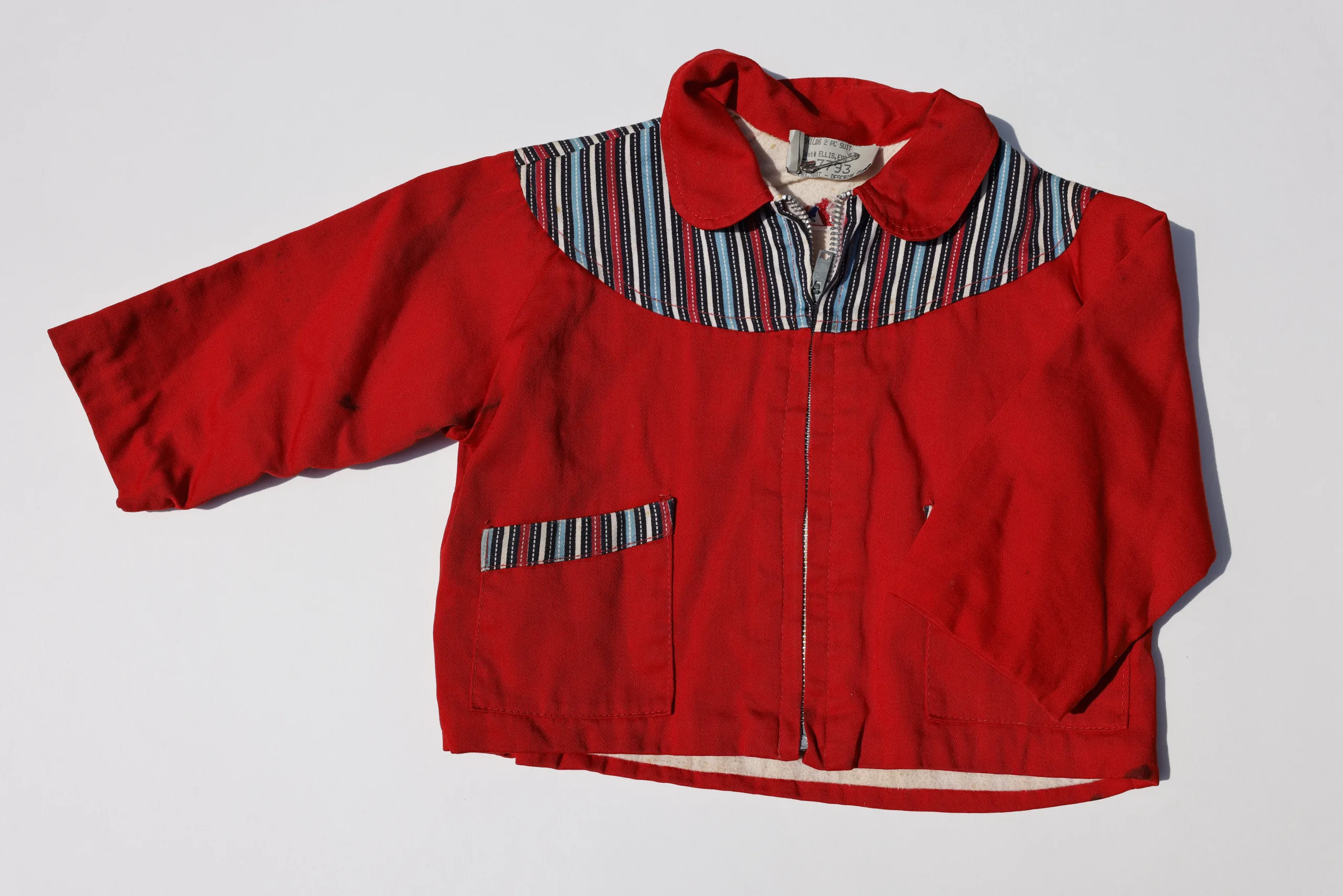
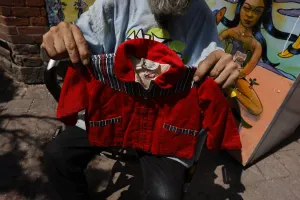
After Grant, a poet and panhandler who’s long been in and out of housing, lost his adoptive mother recently, he found out she had kept the little red jumpsuit he was wearing when she adopted him from an orphanage more than 60 years ago. “She wasn’t a pack rat, but she was very good about saving things that really mean something to her,” he says. The outfit means a lot to Grant, too. He’s currently living in subsidized housing but, like many in his situation, he doesn’t feel like his belongings are secure. Worried something might happen to it, he gave the matching shirt and pants to Kimberly Curry, executive director of the Seeds of Hope Foundation, for safe keeping. Curry’s white van has become a makeshift vault for many people with unstable housing situations, and it’s full of loose pieces of their lives: jewelry, documents, family photos, the ashes of a loved one. “Sometimes I take stuff to my apartment because it gets filled up,” Curry says.
Lartese, 42
Lance McMillan/Toronto Star
“Toronto’s a great city,” according to Lartese, who lives in Allan Gardens. But, he adds, there’s a lot of consumerism and waste. He was “part of the consumerism” before he lost his job in 2008 and eventually slid into homelessness. Now Lartese finds much of what he owns by sorting through what people throw out. He has to be resourceful because losing stuff — or, rather, having it taken — is so common. “The city just the other day, they took everything around me,” he claims, his eyes squinting as he repairs an upturned bike. (He says he recently lost his prescription glasses in a separate incident.) He understands the city’s motivation. “Their mandate is to keep the parks clean and usable for the general public. And this is an aberration of that,” he says. Still, it stings. “You can try to cherish things. But then if you get attached to anything, it becomes a bigger heartbreak because it’s always going to go.” Lartese, who says he doesn’t steal, describes his BMX bikes as essential. “If I find something,” he says, gesturing to one ride, “that turns into my dolly.”
Michelle, 56
Lance McMillan/Toronto Star
Michelle is hobbling because someone stole the battery charger for her wheelchair a few weeks ago. After she broke her foot in several places, she developed gangrene and almost lost it. Now she can walk, but not more than a few blocks a day. Michelle was living in a subsidized room, but she says it’s infested with mice and she lost her rental subsidy while she was in the hospital, so that’s how she ended up at Allan Gardens, the first time she’s had to live outside. She holds the white cross dangling from her neck close. She says she doesn’t fit neatly into any Christian denomination, but on Jan. 18, 2022, she found herself on her hands and knees at CAMH after years of addiction. “I said, ‘Jesus, I need your help.’ And everything’s being going pretty good since then.”
Murad, 49
Lance McMillan/Toronto Star
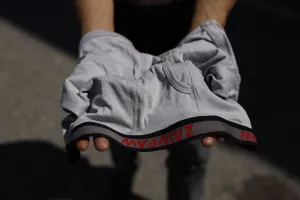
Murad, a French native who came to Canada in his teens, collapses his tent every morning and stores most of his belongings at a friend’s home, saving him from lugging all of it around. Except for his underwear. “I always carry my underwears with me,” he says. Murad’s a survivor of abuse, and he thinks of his briefs almost like armour, something to “hold onto.” In the past, people have taken Murad’s underwear, which felt like an invasion. “It’s like somebody taking my sexuality,” he says. He has a quick smile and gentle nature about him, despite past trauma that’s left him on guard. “I want to lock myself everywhere,” he explains. “Like armour with a key.” But, he adds, “nobody can find the key. You know what I mean?”
Tyme, 70
Lance McMillan/Toronto Star
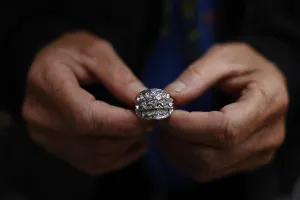
Tyme, a Sault Ste. Marie native who’s now 70, says he’s been homeless since 1995. Earlier this year, the city cleared his tent off the sidewalk with a mechanical claw. He lost many of his belongings, though he says much of his stuff was already wet and “no good anymore.” He now sleeps in a doorway, hesitant to re-pitch his tent, which may, like before, attract others and lead to another clearance. Some sleeping rough, like Lartese, collect lots of stuff. Not Tyme: “The lighter you travel, the better off you are.” When asked if there’s anything he carries that he cherishes, he pulls out two chunky rings that he bought from a friend. What’s their significance? He shrugged. “I like jewelry,” he explains. “You dress up. You go out for an evening … It’s nice to have one on.”
Bryan, 52
Bryan estimates city workers have swept his campsite in Allan Gardens six times. “It’s been on and off going since last year,” he says. Each time, Bryan says, he was momentarily away from his tent. “You gotta start from f—king scratch.” According to city policy, “abandoned property” deemed “irreplaceable” — and which isn’t soiled, broken, waterlogged or hazardous — is stored and retrievable for up to 30 days. But Bryan says he has never got any of his stuff back, nor would he know how. “They say nothing.” Theft among residents at Allan Gardens is also a concern. But Bryan, who’s originally from Hamilton, depends on trusted neighbours to watch over his stuff when he’s gone or asleep. What would hurt to lose? He immediately points to his shopping buggy. “I make my money on that,” he says. Does he have anything that holds personal significance to him? “No, I don’t have anything like that no more. I lost that long ago.”
Dan
Lance McMillan/Toronto Star
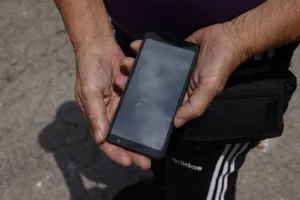
Before moving into housing about a month ago, Dan slept on his side to conceal his money pouch, with his cellphone in his pillowcase, worried either would be stolen if exposed. He had come to Toronto after being pushed out of his rented home in Ottawa. All around him, he saw people lose their belongings. “You’re always watching your back,” he says. When you don’t have anything, you become “an opportunist.” It’s not that people want to steal, he added. “It’s surviving … Some people think street people are garbage. You don’t know what happened to them.”
Stephanie, 34
Lance McMillan/Toronto Star
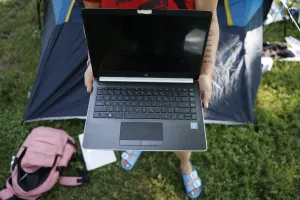
“What everyone has here, that’s all they have. That’s their life,” Stephanie says, looking out across the encampment that now dominates a city park. “We’re just trying to live. Just like everyone else, right. And we want to secure our stuff just like anyone else would in their home.” Except, she adds, in an apartment, you can lock the door and leave. But leaving your tent is always a risk out here. Stephanie’s been homeless for about a year and a half, some of that spent in hotel shelters, where she says theft is common. Inside or outside, she says, “it’s no different.” What does she own that’s most important to her? Her laptop. It holds pictures of her kids, her old dogs, a video of her giving birth. “Irreplaceable.”
This story originally appeared in the Toronto Star